




In recent years, the presence of soldiers patrolling the streets of cities like Paris, Rome, or Milan has become common, especially after terrorist attacks and migration crises. However, in Spain, the presence of armed soldiers in public spaces is practically nonexistent. This contrast raises an interesting question: why is the military used for public security in Italy and France, but not in Spain?
A Matter of Tradition and Political Culture
The difference in the use of the military in the civilian context is not only explained by security reasons but also by the history, Constitution, and social perceptions of each country.
In France, Italy, and Belgium, the use of the military in internal security operations is legally regulated and socially accepted. In France, the Sentinelle operation, launched after the 2015 attacks, is the most well-known. Currently, between 7,000 and 10,000 soldiers patrol stations, monuments, and other sensitive places as part of a permanent anti-terrorism surveillance operation. On exceptional occasions, such as the Paris 2024 Olympic Games, the deployment reached 18,000 men. The presence of soldiers on the streets is a measure supported by the population and considered a reinforcement of security.
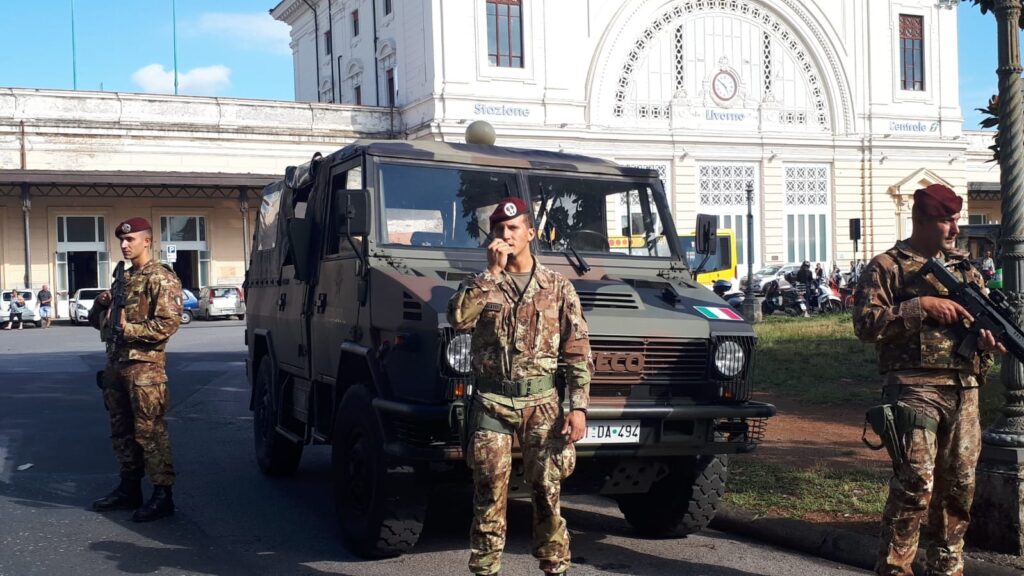
Italy has also followed a similar path with the Strade Sicure operation, started in 2008. Over the years, thousands of Italian soldiers have patrolled key areas of cities, collaborating in the protection of stations, monuments, and other sensitive sites. Even in operations outside the anti-terrorism context, such as the eviction of illegally occupied homes in 2024 in Caivano, paratroopers from the Folgore Brigade, the elite unit of the Italian army, were employed to support local authorities.
The Case of Spain: A Constitutional and Emotional Barrier
In contrast, in Spain, there is a clear separation between the military and civilians, and the use of the Armed Forces in public order tasks is limited by the 1978 Constitution. Its article 8 establishes that the role of the army is limited to national defense and the protection of the territorial integrity of the State. This legal limitation is joined by a historical memory deeply marked by the Francoist dictatorship, when the military played an active role in internal repression. This past has generated a widespread rejection in Spanish society towards any attempt at "militarization" of civilian life.
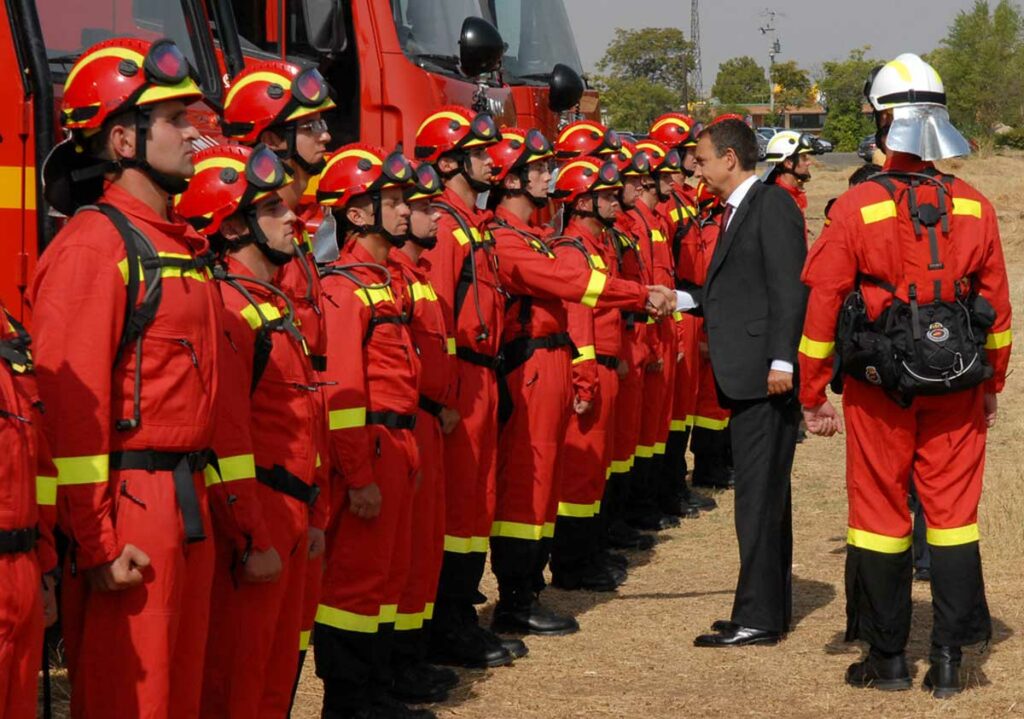
In case of internal emergencies, Spain relies on specialized civilian bodies such as the National Police, the Civil Guard, and autonomous police forces like the Mossos d'Esquadra or the Ertzaintza. The only exception to this rule is the Military Emergency Unit (UME), created in 2005, which is intended to intervene in case of disasters or calamities, both nationally and internationally. However, the UME does not perform public order functions or police operations, and its deployment always occurs without weapons of war and under the direction of the Ministry of the Interior.
A Matter of Necessity or Principles?
From an operational point of view, Spain does not have an urgent need to deploy armed soldiers on the streets, as it has well-distributed and specialized police forces. However, the absence of military personnel on the streets mainly responds to a constitutional and cultural principle that limits the use of the army in the civilian context. In contrast, in countries like France and Italy, the presence of soldiers is interpreted as an additional measure to ensure security, especially in contexts of anti-terrorism alert.

It is important to note that this difference does not only concern Spain. In countries like Germany, the use of the army on national territory is also strongly limited by law, due to lessons learned from World War II. Instead, in many Eastern European countries or in Belgium, it is more common to see soldiers patrolling sensitive areas.
Conclusion
Ultimately, the presence or absence of military personnel on the streets does not necessarily reflect a higher or lower level of security, but rather a political and historical choice that depends on the type of relationship each society wants to have with its Armed Forces. While Spain has chosen to maintain a clear distinction between civilian and military contexts, countries like France and Italy have adopted models where the army is part, albeit in a limited way, of the public security apparatus.
Each model has its own arguments and justifications, but what matters is that each nation has decided, based on its own history, Constitution, and cultural perception, how to integrate the role of the Armed Forces in internal security.




Comments
No comments yet. Be the first!