




In the context of global challenges and the growing competition with powers like the People's Republic of China, the Pentagon has launched the Replicator initiative, an ambitious project aimed at equipping the U.S. armed forces with autonomous and scalable capabilities on a large scale. The goal is to quickly develop and deploy autonomous systems capable of operating in various war domains. The first iteration of the program, Replicator 1, was announced in August 2023 and aims to integrate autonomous systems capable of operating in the thousands and at low costs by 2025. Despite the administrative and technological difficulties that could slow down the program, Replicator represents a unique opportunity to address increasingly sophisticated threats and to transform the way the armed forces operate.

The Challenges and Progress of the Replicator Program
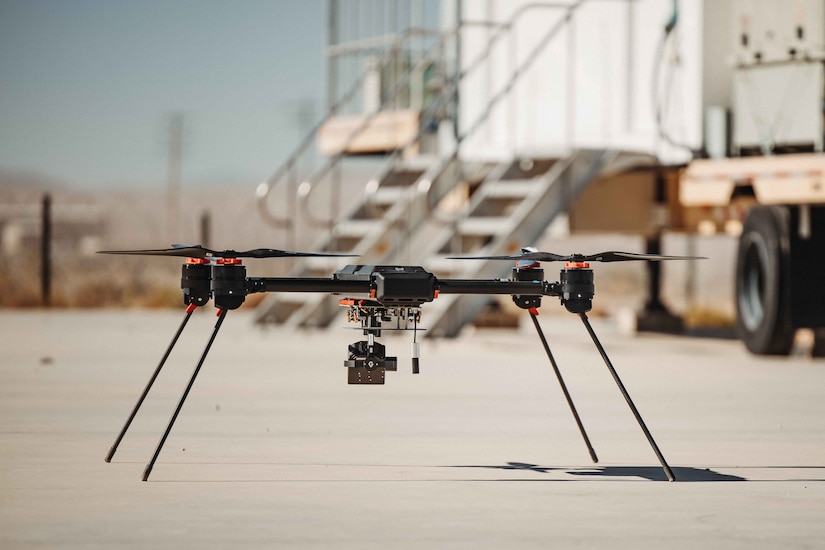
Replicator is based on a revolutionary concept that leverages low-cost autonomous systems, capable of operating in an attritable manner, meaning they can be sacrificed without significantly compromising strategic operations. These systems, which can be drones or other unmanned devices, offer numerous advantages: cost reduction, lower risk exposure for personnel, and the ability to rapidly evolve in response to operational changes. Replicator 1 plans to deploy thousands of these systems within 18-24 months, but despite the initial enthusiasm, the project is encountering obstacles related to funding and the integration of advanced technologies, which could slow progress. The greatest difficulty, however, is the need to coordinate a series of disruptive innovations in a complex and traditionally slow system like defense.
In this context, it is useful to look at the successes achieved by previous initiatives, such as the Navy's Unmanned Task Force, which has integrated disruptive capabilities both in the naval dimension and in the joint forces. The success of this task force demonstrates that, despite difficulties, it is possible to integrate new technologies into the defense system, even in a complex organizational environment like the Pentagon. The Unmanned Task Force used innovative approaches, such as rapid experimentation and direct engagement with commanders, which could also be applied to Replicator to overcome ongoing challenges.
The Role of the Commercial Sector and Public-Private Collaboration
A crucial element for the success of Replicator is collaboration with the commercial sector. Private companies are leading the development of emerging technologies, particularly regarding autonomous systems. Replicator is strengthening this collaboration, with more than 500 companies participating in the first iteration of the program. Of these, about 75% are non-traditional defense contractors, which signals a significant change in how the Pentagon acquires the necessary technologies. The Replicator initiative not only provides a clear demand for autonomous capabilities but also stimulates investments in strengthening production capacity, expanding the U.S. industrial base.
Collaboration with the private sector is essential, as it allows for the acceleration of the development of innovative solutions and the exploitation of already available technologies. Moreover, Replicator offers a unique opportunity to overcome challenges related to production capacity, authorization policies, and system integration. However, as suggested by the experience of the Unmanned Task Force, it is essential that the Pentagon not only invests in new technologies but also in an approach that fosters rapid adaptation to new operational circumstances while maintaining strategic alignment with the needs of the combatants.
Lessons from the Unmanned Task Force: Applications for Replicator
Jason Stack, co-founder of the Navy's Unmanned Task Force, outlined four key principles that led to the success of his program and could also be useful for Replicator. The first principle is to focus on problems, not requirements: success depends on the ability to solve concrete challenges, rather than adhering to predefined requirements. This approach allowed the Task Force to refine its solutions in a targeted manner, without being hindered by bureaucratic constraints. The second principle concerns mediating innovative processes: isolating the innovation group might bring speed, but risks creating barriers that limit its effectiveness. Integration with the existing organization is crucial for achieving a lasting impact.
The third principle is experimentation: every failure must be seen as a learning opportunity. This approach allowed the Task Force to constantly improve its projects, learning quickly from the results obtained. Finally, the fourth principle is to prioritize discovery and speed, rather than efficiency and scale. Replicator must focus on rapid experimentation and the exploration of new ideas, then optimize and scale once the solution has been consolidated.
The Replicator program represents a significant challenge for the Pentagon, but also an unprecedented opportunity to transform the capabilities of the U.S. armed forces. The integration of autonomous systems capable of operating on a large scale and at low costs is a complex challenge, but the experience of the Unmanned Task Force and collaboration with the private sector offer a valid model for accelerating progress. If Replicator can overcome administrative and technological obstacles, it could revolutionize the way the armed forces face future threats, making their operational capability more agile, economical, and lethal.




Comments
No comments yet. Be the first!