


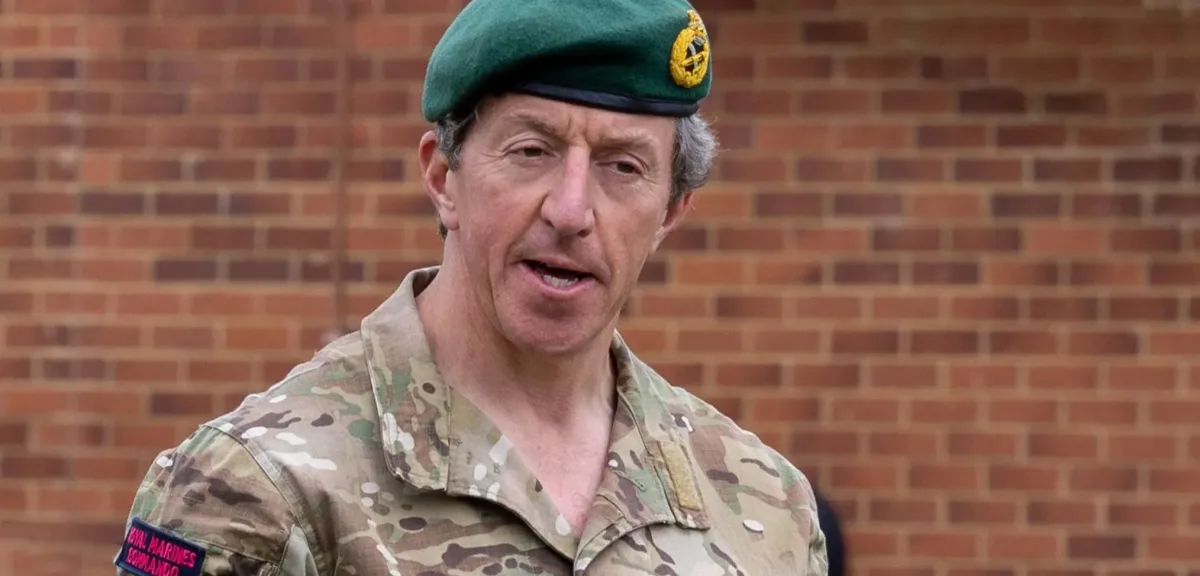

With a solemn ceremony in the historic Great Cabin of HMS Victory, Admiral Nelson's flagship, General Sir Gwyn Jenkins formally assumed command of the Royal Navy as the new First Sea Lord and Chief of the Naval Staff. This is an unprecedented appointment in the modern history of the British Navy: for the first time, the operational leadership of the Royal Navy is entrusted to an officer of the Royal Marines.
The ceremony, held at the Portsmouth naval base, was attended by numerous military leaders, including Vice Admiral Sir Martin Connell, Acting Chief of Naval Staff, who temporarily held command following the controversial early retirement of Admiral Sir Ben Key, removed for disciplinary reasons.

A Distinguished Military and Political Career
Sir Gwyn Jenkins is a prominent figure in the British armed forces, with over thirty years of career spanning special operations, operational command, and strategic roles. Commissioned into the Royal Marines in 1990, he served in the most complex conflict theaters, including Northern Ireland, Iraq, and Afghanistan, where he received the OBE for operational merits. He commanded the prestigious Special Boat Service (SBS) and led the 3rd Commando Brigade during a crucial phase of modernization.
In addition to field experiences, Jenkins has taken on key roles in Defense administration: in 2012 he was appointed Military Assistant to Prime Minister David Cameron and subsequently joined the Cabinet Office as Deputy National Security Advisor. Between 2022 and 2024 he was Vice Chief of the Defence Staff, being promoted to full General. Since August 2024, he has served as Strategic Advisor to the Secretary of Defense, contributing to negotiating recent military cooperation agreements with Germany and Norway.

The Duties and Challenges of the New First Sea Lord
General Jenkins takes command of a force of over 30,000 men and women, 50 naval units – including nuclear submarines and warships – and all components of the Fleet Air Arm and the Royal Marines. During his tenure, the operational debut of the Type 26 and Type 31 frigates, the launch of the seventh Astute-class unit, the start of construction of Fleet Solid Support Ships, and the ongoing development of the new Dreadnought-class strategic submarines are expected.
His first words in the new role emphasized the centrality of war readiness and innovation:
“It is a great honor to officially begin the role of First Sea Lord today. Leading the sailors, marines, and civilian officials of the Royal Navy is a true privilege. Our mission – to protect the United Kingdom – is more urgent than ever: we must strengthen combat readiness, modernize more rapidly, and shape the Navy our nation needs.”

An Appointment Amid Expectations and Controversies
The appointment of a Royal Marines General has sparked mixed reactions. For some sectors of the Navy, the fact that Jenkins has never commanded a naval unit represents a limitation; for others, on the contrary, it is an opportunity to bring about a change of pace and offer an innovative perspective. As noted by Sir Tony Radakin, Chief of Defence:
“His appointment reflects the increasingly deep integration between the Royal Navy and the Marine Corps. Jenkins brings with him a rare combination of operational experience and strategic vision.”
However, there are shadows. The General has been mentioned in the Afghan Unlawful Killings Inquiry, concerning alleged summary executions by Special Forces units. According to some sources, he had access to information not reported in a timely manner. The Ministry of Defense has expressed full confidence in his conduct and capabilities, but the media context could influence part of his mandate.

A Navy in Transformation
The Royal Navy today faces a series of systemic challenges: shortage of operational frigates, limited availability of submarines, outdated infrastructure, and difficulty in retaining qualified personnel. The new First Sea Lord will need to set a clear direction on crucial programs such as SSN-AUKUS (new nuclear-powered submarines), Type 83 (future anti-aircraft destroyers), MRSS (new amphibious ships), and the transformation of naval aviation.
Another delicate front will be resources: the risk of internal competition between the priorities of the Royal Marines and those of other Navy components is real. Jenkins will have to balance investments between personnel, drones, counter-drone technologies, and war stocks, without losing cohesion among the different branches of the British Senior Service.
Conclusion: A Turn with Ambition
The appointment of Sir Gwyn Jenkins represents a historic turn, not just a formal one. It carries the symbol of a Royal Navy that is evolving, recognizing the value of its Marines not only in the field but also at the top of strategic leadership. It remains to be seen whether his hybrid experience – between operations and government, between naval infantry and strategic planning – will embody the transformation of a Navy that wants to return to being a protagonist in an increasingly unstable world. In any case, the task is clear: modernize, strengthen, and unite.





Comments
No comments yet. Be the first!