




The contemporary global geopolitical landscape is dominated by a ruthless competition in which economic, military and technological supremacy does not represent a simple advantage, but the fundamental condition for national sovereignty. The new National Security Science and Technology Strategy (NSSTS) of the United States sets an unequivocal paradigm: scientific leadership is a primary pillar of national security, inextricably linked to the projection of military power and the resilience of defense.
In this scenario of advanced geostrategic competition, in which systemic rivals invest massively in disruptive technologies, Europe and Italy can no longer afford inertia or subordination. For Rome and for Brussels, the strategic awakening must translate into a rigorous operational agenda founded on four key directions.
The Four Pillars of Strategy and the Imperative of Focus
The American strategy imposes a fundamental dogma: in an era of finite financial resources and accelerated technological competition, the dispersal of efforts is a guaranteed defeat. Focusing competition means concentrating research, development and capital exclusively on those enabling sectors that guarantee clear superiority on the modern battlefield and impenetrable protection of national territory.
1. Critical Technology Priorities (CET) and the Three Domains of Dominance
At the center of this first pillar lies supremacy in three interconnected operational and technological areas:
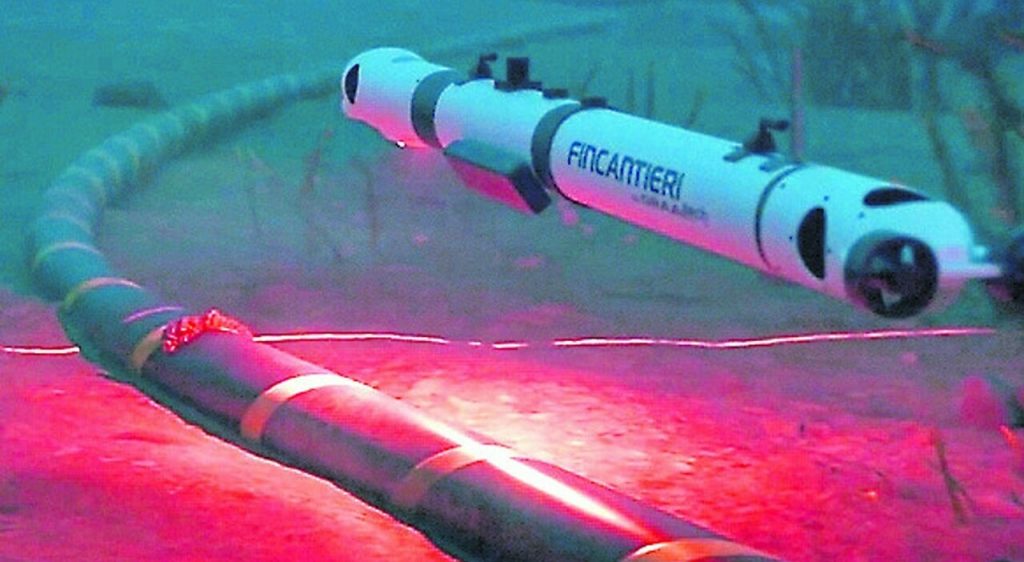
- Undersea Superiority (Undersea Warfare): It is no longer merely a matter of managing a fleet of advanced submarines, but of dominating the entire submarine volume through a dense network of sensors, autonomous underwater vehicles (AUV) and active protection of critical undersea infrastructure (such as fiber optic cables and pipelines).
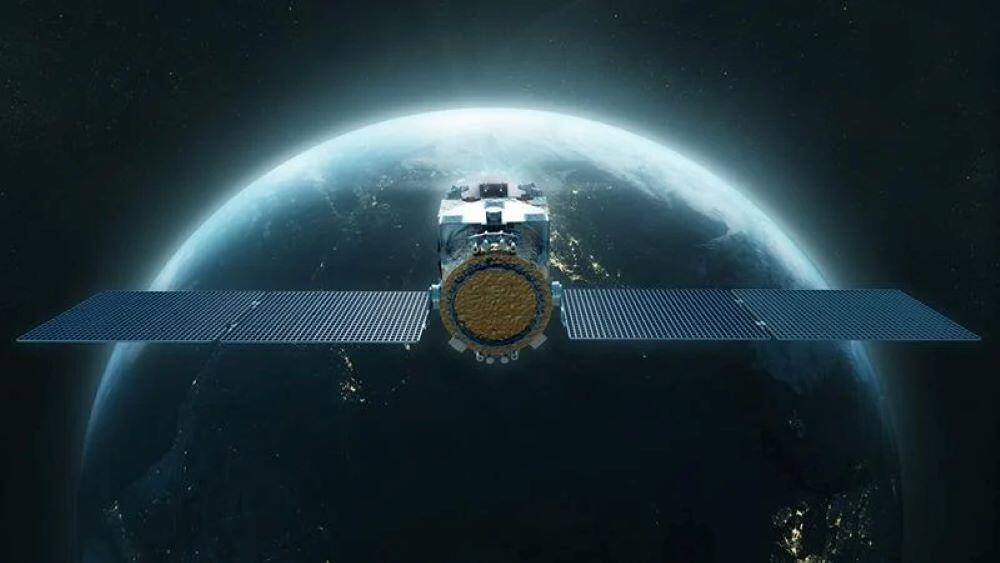
- Space: Space is no longer a peaceful sanctuary or simply a transit environment for communications, but a contested operational theater. The strategy requires the ability not only to detect orbital threats, but to actively counter them, covering the arc from low earth orbit (LEO) to cislunar space and the Moon.
- Artificial Intelligence, Autonomy and C5ISR: The integration of autonomous systems (from drone swarms to surface and air platforms) supported by artificial intelligence algorithms capable of processing enormous volumes of data in real time. All encompassed within the C5ISR system (Command, control, communications, computer, cyber, intelligence, surveillance and reconnaissance), which constitutes the true "nervous system" and sensorial network of the integrated armed force.
The Specific Lesson for Italy and the Mediterranean
For Italy, a profoundly maritime nation situated at the center of the extended Mediterranean — a geopolitical basin with extremely high density of tension and heavily exposed on NATO's southern and eastern frontiers —, this first pillar represents an immediate call to action:
- Enhance and integrate industrial champions: The national industrial ecosystem, led by global players such as Leonardo and Fincantieri, already possesses first-rate technological excellence (from the construction of cutting-edge submarines to electronic surveillance and space systems). However, isolated technology is insufficient: a systematic effort is needed to connect these platforms in a unique, interoperable and resilient digital architecture.
- Guarantee asymmetric superiority: In high-intensity scenarios, decision-making times have compressed to mere seconds and electronic warfare or counter-drone systems are the line of demarcation between survival and destruction. Italy must accelerate the transition toward doctrines that combine large strategic platforms with fleets of economical and sacrificial autonomous systems (attritable assets), closing the gap with respect to global peer competitors.
2. Industrial Resilience and Supply Chain: Securing Value Chains
The second pillar concerns technological resilience and mitigation of vulnerabilities in supply chains to eliminate critical dependencies on hostile actors.
- The European Achilles Heel: Europe has paid a high price for the risks of fragmented value chains, especially in the extraction and refining of critical minerals and in the production of semiconductors and advanced microelectronics.
- Actions for Rome: Italy must promote a defense industrial policy that encourages nearshoring and homeshoring of critical components, while simultaneously protecting strategic infrastructure, including undersea communication networks and energy flows in the Mediterranean.
3. Agility and Innovation: Overcoming Military Bureaucracy
Traditional acquisition cycles, slow and bureaucratic, render the European military instrument inadequate compared to the pace imposed by commercial innovation and global competitors.
- Contracts and Venture Capital: The US strategy demonstrates the urgency of accelerating innovation through rapid funding, public-private partnerships and the involvement of startups and non-traditional actors (leveraging tools such as the NATO DIANA initiative and dedicated funds).
- The Value of Risk: Accepting technological risk and allowing innovative SMEs to "fail fast and reorient" is the only way to close the gap with superpowers.
4. Protection of Intellectual Property and Research Security
The fourth pillar protects the national research and development ecosystem from predatory acquisition and economic espionage conducted by hostile state actors through universities and dual-use laboratories.
- Rigorous Regulations: Following the example of the US NSPM-33 protocol and controls on foreign investment (CFIUS), the European Union must equip itself with analogous and effective barriers.
- The Protection of Italian Excellence: Italy, custodian of a cutting-edge scientific heritage (from quantum physics to advanced materials and biotechnology), must implement rigorous controls on foreign capital flows and sensitive academic collaborations.
Conclusions: Priorities for the Next Decade
The comparative analysis of security strategies traces a necessary route that Italy and Europe must pursue with determination:
- Strengthen Technological Sovereignty: Invest in critical emerging sectors (AI, quantum, space, hypersonic) reducing vulnerable dependencies.
- Accelerate Defense Procurement: Simplify procurement and infuse the military world with the agility of civil industry and startups.
- Protect the Scientific Ecosystem: Implement effective defenses against technological espionage by strengthening transatlantic cooperation.
Only through clear political vision, adequate resources and firm will for technological power can Italy and Europe preserve their geopolitical role, ensuring security and prosperity for future generations.




Comments
No comments yet. Be the first!