




The British Army has officially announced the creation of the 9th Deep Recce Strike (DRS) Brigade, a new strategic unit under the command of the Allied Rapid Reaction Corps (ARRC) of NATO. The unit is established with the aim of centralizing and expressing at the Corps level the capabilities of deep reconnaissance, surveillance, and target acquisition (STA), as well as the firepower of heavy artillery. The 9th DRS inherits the legacy of the previous “Multi-national Field Artillery Brigade”, surpassing its structural limitations: while the old formation was essentially a "framework" command in peacetime — whose operational capability depended entirely on the sensitive assets that individual allies decided to detach to the ARRC — this new brigade is proposed as a decidedly more solid, autonomous, and credible military tool.
Structure and Transition: The Involved Regiments
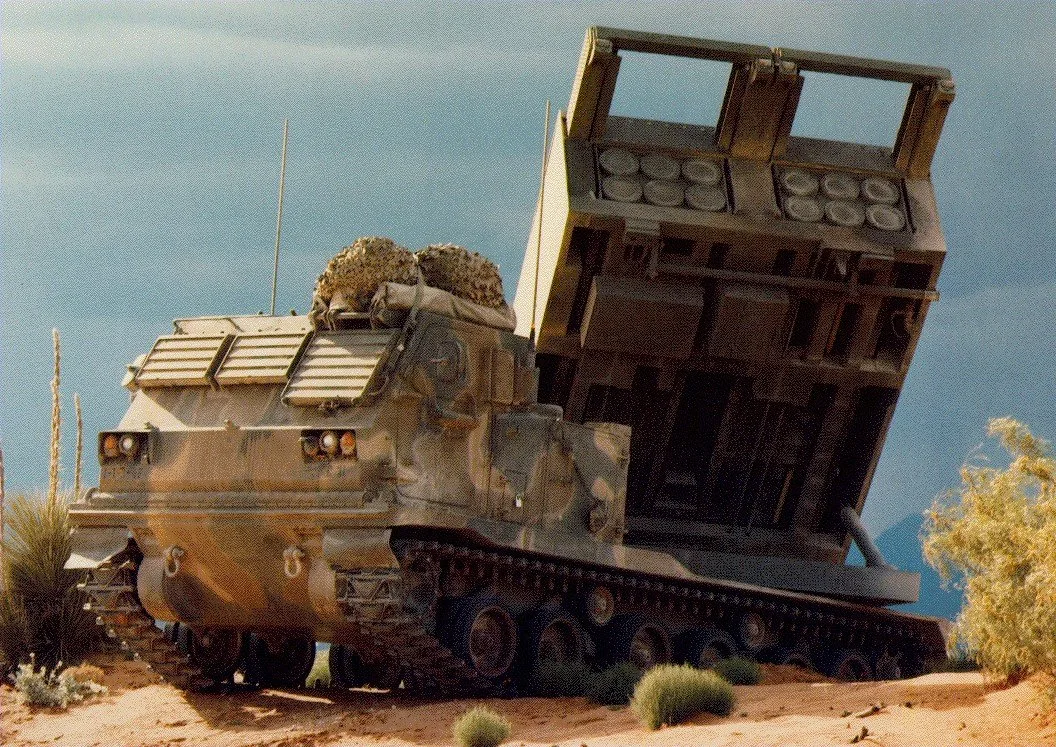
The initial core of personnel and capabilities of the 9th DRS is guaranteed by two British reservist regiments: the 100th and 101st Royal Artillery (RA). In particular, the 101st RA is the reserve unit that already operates with the M-270 MLRS multiple rocket launchers.
However, to fully meet the operational requirements of the new brigade, the formation of a regular M-270 regiment is already planned: for this purpose, the 39th Royal Artillery will be reactivated, although the official timelines have not yet been announced.
The DRS Brigade Triad
With this move, the 9th DRS becomes the third formation of this type within the British Army. During 2025, the armed force began to split the previous single 1st DRS Brigade Combat Team into two separate and specialized brigades:
- 1st DRS Brigade: Assigned to the 1st Division.
- 3rd DRS Brigade: Assigned to the 3rd Division (the leading armored division).
- 9th DRS Brigade: Assigned, as seen, at the Corps level (ARRC).
The Comparative Framework of DRS Brigades
Each DRS brigade has a modular structure, but adapted to its level of employment (divisional or corps). The brigades assigned to maneuver divisions also integrate Cavalry regiments and howitzer regiments.
Here is how the three brigades are currently structured:
| Brigade | Assignment | Deep Fires Regiment (M-270) | Cavalry / Reconnaissance | Howitzer / Support Regiments | Special Notes |
| 1st DRS | 1st Division | 3rd Royal Horse Artillery | On JACKAL vehicles | 4th Royal Artillery | Requires an additional howitzer regiment. |
| 3rd DRS | 3rd Division | 26th Royal Artillery | On AJAX vehicles | 1st Royal Horse Artillery & 19th Royal Artillery | Also controls the 5th RA (specialized STA regiment). |
| 9th DRS | ARRC (Corps) | 39th Royal Artillery (Future/Regular) + 101st RA (Reserve) | N.D. | 100th Royal Artillery (Reserve) | Replaces the Multi-national Field Artillery Brigade. |
The future of tube artillery: All mentioned howitzer regiments (1st RHA, 4th RA, and 19th RA) are set to receive, starting from 2028, the new wheeled self-propelled BOXER RCH-155.
Further adjustments in the structure of the British Army are nonetheless expected around the corner. The 1st DSR, for example, would need a second howitzer regiment to adequately cover both its maneuver brigades. It remains to be seen whether the promised Defence Investment Plan, expected by the next NATO summit on July 7, will provide clear indications and financial coverage in this regard.
International Trends and the Enhancement of M-270s
The British choice to deploy heavy artillery at the Corps level is not isolated. Recently, the Chief of Staff of the French Armée de Terre declared in Commission that, in the future, France will need a Deep Fires battalion equipped with new rocket launchers for each of its two divisions, plus a third battalion assigned directly at the Corps level.
To support this doctrine, the British Army already has a massive program underway to upgrade and expand its fleet of M-270s:
- 61 launchers are currently being outfitted and upgraded.
- 15 additional launchers are planned, although not yet contracted.
- The overall deliveries will conclude in 2029 (as of today, the first 4 upgraded vehicles have returned to the UK).
The New Frontier: Kamikaze Drones (One-Way Effectors)
The British Deep Fires regiments will not rely solely on traditional or guided rockets but will also integrate the so-called One-Way Effectors (OWE) long-range (commonly known as kamikaze drones or loitering munitions).
Recently, during the SPRING STORM exercise in Estonia, the British Army unveiled to the public the second OWE to officially enter service: the Callen Lenz NYAN. This system joins the DART 250 by Modini, previously introduced. Both vectors share a key feature: the ability to hit high-precision targets up to 250 km away.
Currently, the 26th Royal Artillery (3rd DRS) is acting as the "pioneer" unit for the tactical development of this technological capability, which will presumably be extended in the future to all other regiments equipped with M-270, including the newly formed 9th Brigade.




Comments
No comments yet. Be the first!