




The success of the Spectrum rocket marks a historic turning point for continental Europe. In a sector that represents a critical bottleneck for the Continent's space capabilities, Germany establishes itself as the new industrial and technological reference point.
Access to space is no longer merely a matter of scientific exploration or national prestige: it is the fundamental strategic infrastructure of the 21st century. Satellites for telecommunications, climate monitoring, geolocation, and national security all require a mandatory passage: launch vehicles. However, for years this segment has constituted a true strategic bottleneck for Europe, which has long remained dependent on foreign suppliers or blocked by delays and rigidities of large traditional programs.
In this scenario of critical urgency, Germany consolidates itself as the new strategic and industrial leader in the micro-launcher sector in Europe.
The milestone: the launch of Spectrum
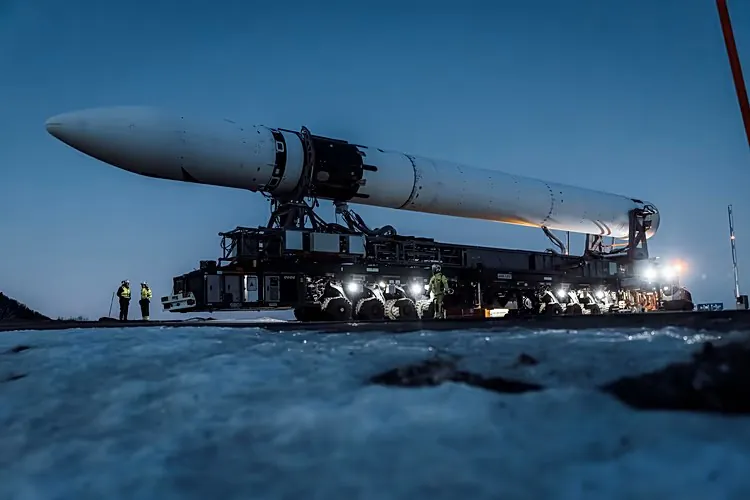
Confirming German leadership is the historic achievement accomplished by the company Isar Aerospace, which from the spaceport of Andøya in Norway has successfully brought its Spectrum rocket into low Earth orbit (LEO).
With the mission named Onward and Upward, the launcher (28 meters tall, equipped with ten engines and capable of carrying up to 1,000 kg of payload) positioned six commercial and educational payloads in orbit, including several CubeSats and technological experiments from European universities.
This is an absolute first in multiple respects:
- First success from continental Europe: It is the first time that a European company has reached orbit with its own vehicle launching from a European continental infrastructure.
- Winner of the European Launcher Challenge: Isar Aerospace became the first company to achieve the objective set by the European Space Agency (ESA) as part of the European Launcher Challenge, beating the deadline set for 2027.
As emphasized by ESA's Director General, Josef Aschbacher, this flight represents the first case in which a new European competitor in the commercial launcher sector has successfully reached orbit.
A historic night for European spaceflight.
— Josef Aschbacher (@AschbacherJosef) September 6, 2026
Huge congratulations to @danielmetzler and the entire @isaraerospace team on reaching orbit with Spectrum 🚀 from continental Europe.
Spectrum quite literally rose to the challenge and delivered its payloads in low Earth orbit. An… pic.twitter.com/zTtvjMundV
The German model: from startup to European leadership
Founded just eight years ago, Isar Aerospace embodies the German space ecosystem's ability to unite agile innovation, commercial vision, and solid institutional support.
The path of the Munich-based startup has indeed been accompanied from its early stages by German and European institutions: from the ESA incubator to victory in the micro-launcher competition announced by the German Space Agency (DLR) — which selected the payloads for this flight — to funding from ESA's Boost! program.
Germany has been able to build a favorable environment capable of rapidly transforming high-tech ideas into operational commercial realities, demonstrating that the private New Space model (following the path of SpaceX in the USA) can flourish in Europe as well.
Unlocking the "bottleneck" of space autonomy
Isar Aerospace's achievement comes at a time of profound transformation and expansion for the European space supply chain. For years, the scarcity and high costs of launch vehicles have slowed down the deployment of European satellites into orbit.
The success of the Spectrum rocket demonstrates that the answer to the space bottleneck lies in diversification, miniaturization, and commercial competition. Although other countries are also taking important steps (such as Spain's PLD Space with the MIURA 5 project), it is Germany that has crossed the finish line to orbit first, establishing the technological and operational standard to which the rest of Europe now looks as a model.
With this launch, Germany has not merely sent satellites into space: it has paved the way for a strategic, autonomous Europe finally capable of competing on equal terms in the new race for low Earth orbit.




Comments
No comments yet. Be the first!