




In the silence of nighttime hours, far from prying eyes and surface radar, the warm and strategic waters of the Strait of Hormuz were the scene of one of the most delicate and risky underwater operations of recent years. According to an investigation by the Financial Times, the mission was not carried out by traditional and cumbersome minesweeper fleets, but rather by small elite teams of Navy SEALs from the US Navy, supported by a silent fleet of robots and autonomous vehicles.
A campaign in the shadows
In recent months of growing tensions and exchanges of accusations between Washington and Tehran, the bottleneck through which a massive portion of the world's oil transits had become a veritable submerged labyrinth. The threat was represented by explosive devices and mines positioned to block or severely limit commercial traffic.
To evade surveillance and operate in a highly hostile context, the US command chain chose the path of maximum discretion. No large surface convoys, easily identifiable and vulnerable: operations took place strictly at night. Navy divers went into action aboard inflatable hull vessels, transforming the seabed into a theater of close-range mine clearance.
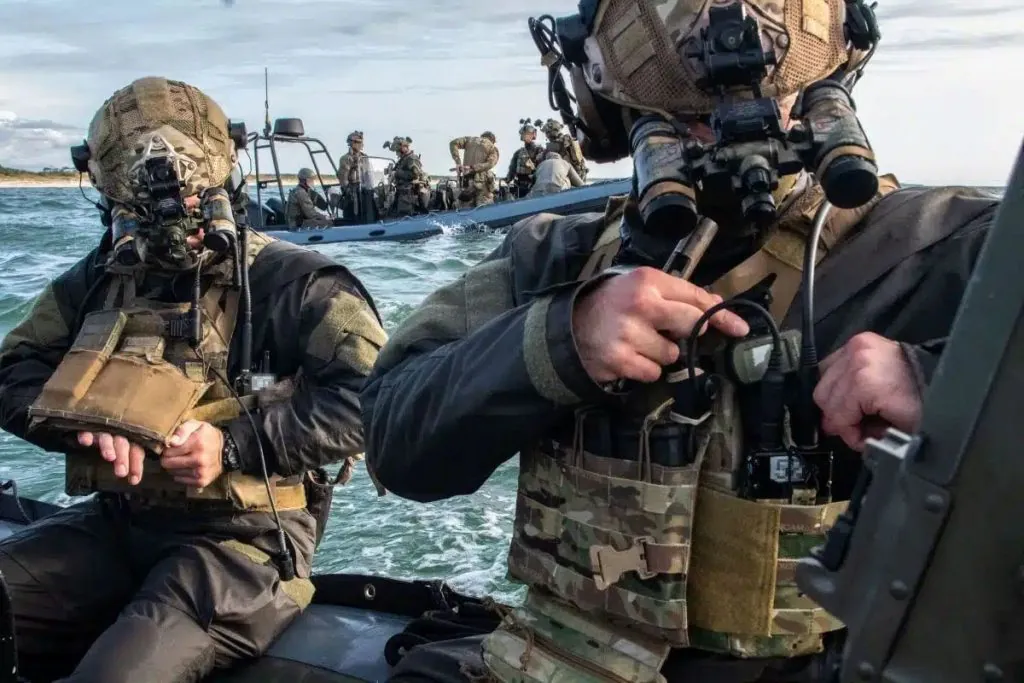
The alliance between man and machine
The success of a mine clearance mission in peacetime or in gray zones typically requires months of meticulous work with surface equipment. In this case, the timelines and methods were revolutionized by the massive use of underwater and surface robotics.
The Navy SEALs relied on autonomous underwater vehicles and systems such as the Common Uncrewed Surface Vessel (CUB/CUSV). These surface drones and underwater robots performed reconnaissance and preventive mapping work, scanning the seabed for anomalies and Iranian mines. Once the device was located, the most dangerous task fell to human operators: a disarming or active detonation process conducted entirely underwater, in darkness, to eliminate the threat at its root without causing casualties or triggering uncontrolled military escalation.
Going public
The operation remained shrouded in secrecy until President Donald Trump's dramatic public announcement, which had surprised international observers by stating that "all mines" in the international waters of the Strait had been removed or detonated. A statement that had initially puzzled geopolitical and defense experts, since the typical US Navy minesweeper fleet did not appear in the naval records of the area.
The missing piece of the puzzle now reveals a different reality: a mine war fought quietly, where autonomous technology and the most specialized human component of the US armed forces acted as an invisible scalpel, reopening the Gulf's oil routes before the crisis could escalate further.




Comments
No comments yet. Be the first!