




The agreement signed between RTX and Shield AI marks a fundamental milestone in the digital transformation process of U.S. defense. More than just an industrial collaboration, it is a joint strategic vision project, born to integrate autonomous artificial intelligence technologies into already tested military systems. The goal: to develop a new generation of intelligent defense tools, capable of dynamically adapting to the battlefield and reducing dependence on direct human control.
The technological core of the agreement is Hivemind, the system developed by Shield AI to ensure mission autonomy in complex operational scenarios. This software will be integrated by RTX into advanced munitions and stationing sensors, two key elements of modern operational superiority. At the same time, the companies are working on the first operational weapon based on “Networked Collaborative Autonomy” (NCA): a revolutionary technology that allows multiple platforms to coordinate in real-time, share data, and act in a distributed manner, even in the absence of stable radio communications.

The project will be entirely self-financed by the two companies, without public funds, as a testament to the confidence in the technological and strategic potential of the collaboration. According to the leaders of the two companies, the union between RTX's solid military engineering and Shield AI's software agility represents the most advanced response to contemporary national security challenges.
RTX and Shield AI, two visions one common strategy
RTX is the world's largest aerospace and defense group, with over 185,000 employees and three leading companies – Collins Aerospace, Pratt & Whitney, and Raytheon – engaged in aerospace innovation and the design of advanced defense systems. Based in Arlington, Virginia, and with revenue of over 80 billion dollars in 2024, RTX has been one of the main suppliers to U.S. and international armed forces for decades. Its strength lies in the ability to develop complex and reliable systems, designed to operate in extreme conditions and on a global scale.
In this context, RTX has seen in the collaboration with Shield AI the opportunity to rapidly enhance the software component of its products, while maintaining high standards of security, traceability, and governance. As CEO Chris Calio stated, “artificial intelligence and autonomy are improving the performance of our products and creating a competitive advantage for our customers.”

Shield AI, a California-based start-up funded by venture capital, is at the forefront of developing artificial intelligence software applied to military purposes. In addition to the Hivemind system, the company has created ViDAR, an advanced AI platform that allows for the automatic detection of aerial and maritime targets, even in threat-saturated environments. ViDAR, integrated into RTX's Multi-Spectral Targeting System (MTS), gives over 3,000 operational turrets the ability to evolve into intelligent autonomous sensors, thus enhancing surveillance and attack capabilities.
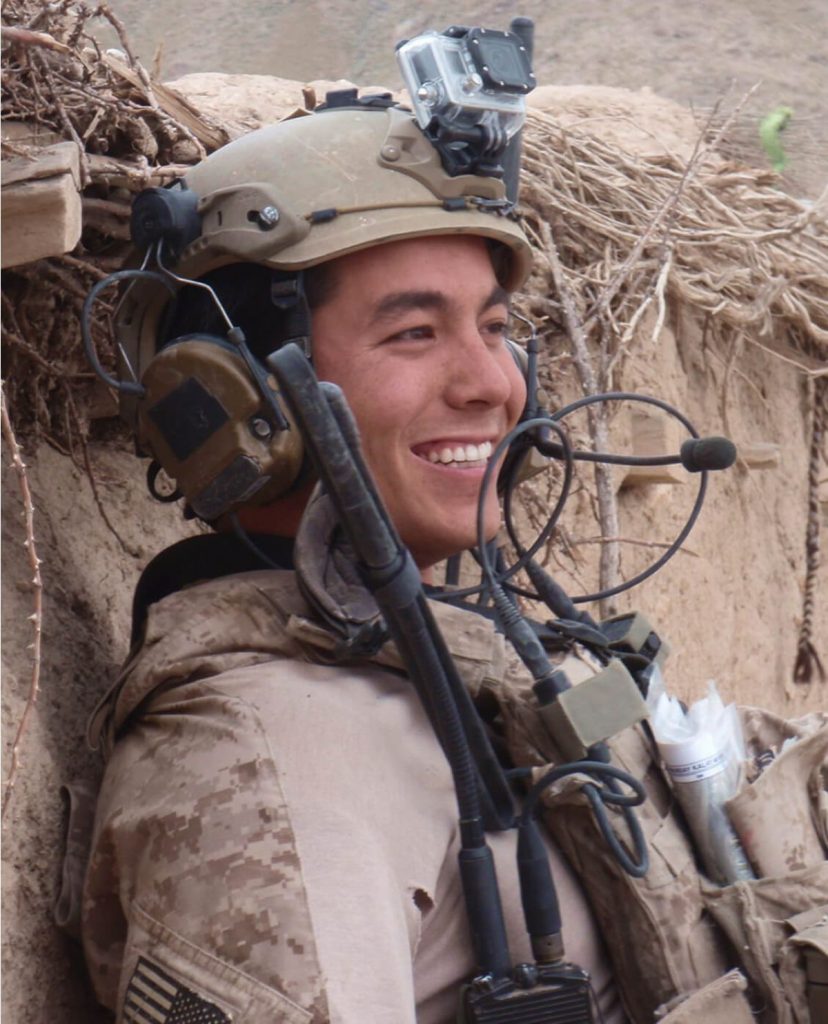
Shield AI's approach is based on a concept of controlled autonomy, where artificial intelligence does not replace humans but relieves them from the meticulous management of tactical operations. In this way, the armed forces can gain in efficiency and responsiveness, improving battlefield safety. Shield AI co-founder Brandon Tseng, a former Navy SEAL, has personally experienced situations where intelligent autonomy could have made a difference in saving lives. Reflecting on future challenges, Tseng asked himself: "What will the army of 2030 look like and what role will autonomy play?" His vision is clear: an army where AI powers every military resource, from aircraft to drones, from ships to satellites, to submarines, creating an interconnected and autonomous ecosystem capable of quickly responding to emerging threats.
Towards a new global defense balance
The partnership between RTX and Shield AI fits into a rapidly evolving geopolitical framework, where war is changing its face. Recent conflicts, particularly the Russian-Ukrainian one, have shown how drones and autonomous systems can represent a transformative force even in high-intensity scenarios. According to the Royal United Services Institute, up to 70% of the damage to Russian military infrastructure was caused by remotely piloted systems, many of which were developed economically and adaptively.
This reality requires major global defense players to rethink the very concept of military superiority. Expensive and sophisticated platforms are no longer enough; quick, adaptable, and scalable solutions are needed, capable of responding in real-time to changes in the operational theater. In this sense, the RTX–Shield AI strategy, which aims to enhance existing systems through the integration of advanced software, represents an effective and sustainable path.

However, technological transformation is not without risks. The real challenge will be to sustain innovation over time, investing in skills, research, and a highly qualified technical workforce. As analysts observe, factories are no longer the heart of military power, but engineers, programmers, and scientists are.
With this alliance, RTX and Shield AI are charting a course that could become a reference model for Western defense: a balance between robust hardware and intelligent software, between human control and autonomy, between past and future. In an increasingly unstable world, the ability to adapt quickly and responsibly will be the true discriminator between those who lead change and those who undergo it.




Comments
No comments yet. Be the first!