




Global geopolitics is undergoing a profound, silent, and unstoppable genetic mutation. This is evidenced not only by the drastic reduction of presence in the Pacific — with the cancellation of joint military exercises with South Korea such as the Ssangyong exercise — but also by the final phase of the progressive withdrawal of U.S. troops from Iraq, with the deadline set for the end of September 2026 for the definitive closure of the U.S.-led coalition mission. For decades, Washington's protective umbrella and permanent presence have been the unquestioned pillars of stability both on the Korean Peninsula and in the Middle East; today, those strategic pacts are radically downsized or archived on the altar of rigid cost-benefit calculation.
American President Donald Trump has never hidden his intolerance toward military commitments deemed too burdensome for U.S. taxpayers' wallets and plagued by alleged lack of reciprocity. However, the parallel disengagements in Asia and Iraq go far beyond simple budget accounting. Reducing direct military presence to shift the center of gravity or confine the superpower's action means drastically redefining Washington's global operational scope, moving from a posture of permanent control to a model based on economic cooperation, intelligence, and bilateral contracts rather than massive ground troop presence.
Faced with Washington's mercantile logic, the South Korean government has sought to cushion the blow by promising massive billion-dollar investments in semiconductors, batteries, and U.S. shipbuilding, while accepting to shoulder an increasing share of the costs for maintaining American soldiers on its territory. Similarly, in Iraq, the end of active military presence opens a complex transition in which Baghdad seeks to reassert its state sovereignty in the face of pressure from militias and regional actors.
Beijing's Advance and the Geopolitical Void
In the void left by an America increasingly focused on its immediate interests, rival powers do not waste time. North Korea, bolstered by its consolidated nuclear status and the recent mutual aid axis forged with Vladimir Putin's Russia, raises the stakes. Pyongyang experiments with drones and strengthens its positions, heedless of Western warnings.
At the same time, China moves with surgical precision. The recent visit to Seoul by China's chief diplomat, Wang Yi, clearly recommends to South Korea's leadership to withdraw from the "logic of blocs" and embrace "strategic autonomy" from the United States. Beijing exploits the disorientation of Washington's historic allies to weave a diplomatic web aimed at redesigning Indo-Pacific balances in its favor.
Will Europe Be Next?
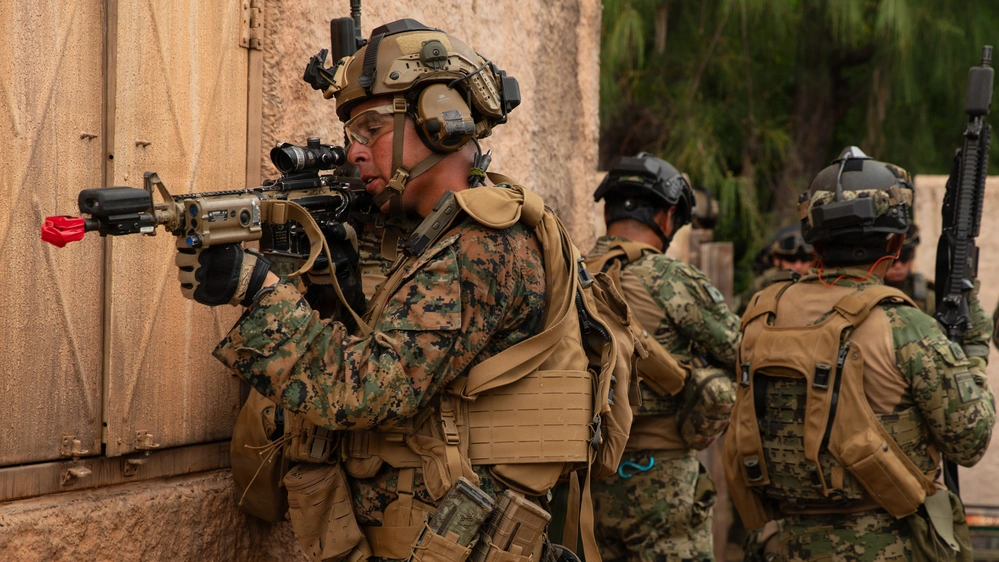
The image that emerges is that of a geopolitical giant — the United States — progressively withdrawing from the role of universal guarantor of security to confine itself within its own national backyard, guided by relentless economic and protectionist pragmatism.
But while the Pacific and the Middle East witness America's progressive disengagement and the discrete advance of competing powers, an anguishing question arises naturally for Western partners: will the next piece of this geostrategic domino be Europe? Either the Old Continent will be "spared" and still protected for reasons of economic interdependence and global market, or the bill for autonomous defense and true structural reform will inevitably also fall on European capitals sooner than we think?
Toward a New Architecture: The Opportunity of an Expanded Atlantic Alliance
It is precisely in this scenario of fragmentation that the systemic crisis of Western security architecture is inserted. As highlighted in analyses on Brigatafolgore.net, NATO is facing a critical phase marked by internal pressures, demands for greater financial burden, and redefinition of strategic commitments by Washington. This dynamic, rather than strengthening the bloc, risks exposing it to mounting tensions, playing into the hands of strategic convergences between Moscow and Beijing.
Faced with an America withdrawing into its own protectionist shell, the response cannot be resignation or fragmentation into national fiefdoms. On the contrary, there emerges with force the necessity and great strategic opportunity to welcome these countries "orphaned" by U.S. protection — starting with advanced democracies in the Indo-Pacific such as South Korea, Japan, Australia, and New Zealand — into an expanded and reformed Atlantic Alliance. Integrating these nations into a cooperative structure based on equal dignity and effective sharing of security objectives would make it possible to create a solid transregional front, capable of securing both the neuralgic European Southern Flank and global multidomain theaters.




Comments
No comments yet. Be the first!