




The profession of arms, as we know, has its risks. But in China, in recent years, being a general of the People's Liberation Army resembles dangerously participating in a tale by Edgar Allan Poe, where protagonists vanish one after another following a grim and inexorable script. The saga of purges that is bloodying the military leadership of Beijing continues to be enriched with new chapters, vaguely recalling the atmospheres of the master of terror's novels, with the small difference that here the "culprit" has a known address.
A countdown that frightens
The recent formalization of the removal of Zhang Youxia from the Central Military Commission ends a mystery lasting seven months, transforming itself into a sort of gradual elimination. Zhang was not an ordinary officer: for the supreme leader he was almost an older brother, a "red prince" bound by family memories and a friendship rooted in childhood. Yet, not even the highest ranks and the most noble connections offer immunity when the Party's axe decides that loyalty has ceased to be absolute.
Since Xi came to power in 2012, the tally of purges has exceeded one hundred and ten high-ranking officers, accelerating vertiginously in the last two years. The magic formula with which these exits are served is always the same: serious violations of discipline and law. Translated from State bureaucratese, it means rampant corruption, colossal bribes, and money diverted from technological modernization funds. In 2025 alone, almost a million officials of various ranks has faced internal justice. But in the case of Zhang and his colleague Liu Zhenli, the accusations exceeded the threshold of simple administrative wrongdoing, brushing against the dangerous borders of high treason.
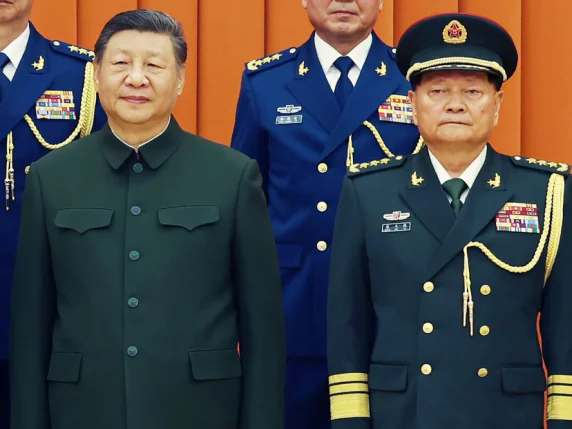
Between coup suspicions and fears for Taiwan
Rumors leaked from the corridors of power speak of blows struck against the president's authority, going so far as to insinuate alleged passages of classified information to foreign intelligence services. Behind the smokescreen of official charges, however, international analysts read far more strategic motivations. Zhang Youxia boasted real combat experience — a rare luxury among today's generals — dating back to the distant and disastrous conflict with Vietnam in 1979.
According to various readings of Western intelligence, the old general's true fault could have been prudence. Faced with Xi Jinping's grand design to prepare the military machine for a show of force on Taiwan by 2027, the centennial of the armed forces, the old guard would have expressed not a few reservations about the feasibility of such a campaign and the real capacity to withstand the clash with the United States. Telling an autocrat that the king is naked, or that the fleet is not ready, is never a wise move. Better still if the warning comes disguised as a crusade against the corrupt.
A leadership reduced to the bone
The result of this impressive cleansing operation is a Central Military Commission reduced to its bare essentials, now populated by very few survivors, among whom stands out the anti-corruption official Zhang Shengmin, elevated to the rank of second vice president. Xi Jinping seems in no hurry to replace the fallen. After all, quickly finding high-ranking officers who don't have even a skeleton in the closet or an offshore account to justify is a Herculean task even in twenty-first century China.
The climb toward military superpower thus passes through the solitude of the summit. The Great Master continues to forge his ideal combat instrument by purging anyone who can boast intellectual autonomy or a personal following too strong. It remains to be seen who, among the few still standing, will dare to give unsolicited advice to the supreme commander, knowing that in the Middle Kingdom the border between being




Comments
No comments yet. Be the first!