




ROME – At the center of the two-day institutional mission to Italy carried out by Lebanese president Joseph Aoun are both the fate of the UN mission in the south of the country (Unifil), whose deadline is set for the end of the year, and the possible structuring of an alternative multinational contingent. The head of state of Beirut will make an initial stop in the capital for political summits and a visit to the Vatican, then transfer to Taranto on the occasion of the Mediterranean Games.
This diplomatic move aims to promote the identification of an effective formula capable of inheriting the operational deployment since 1978, avoiding what Lebanese media outlets define as a risky “security vacuum” in the area.
The Vatican audience and the Framework Agreement issue
During meetings with Pope Leo and Vatican Secretary of State, cardinal Pietro Parolin, Aoun acknowledged the “marked concerns” expressed by the Holy See regarding the difficulties in implementing the framework agreement between Lebanon and Israel, signed in Washington on June 26 last.
The Lebanese leader took the opportunity to ask the Holy See to maintain pressing diplomatic action towards Israel, so that it stops incursions to the south and clears occupied areas. According to Aoun's assessments, only a complete disengagement of Israeli forces will allow reconstruction and the return of displaced populations: passages strictly linked to the restoration of full state sovereignty and the exclusive attribution of the “choice of peace and war” to the government of Nawaf Salam, an objective that inevitably presupposes the military neutralization of Hezbollah.
The US and Israel veto on the French model
Efforts dedicated to the phase following Unifil must, however, contend with the clear closure manifested by Washington and Tel Aviv:
- The US line: The White House now considers the Unifil model outdated, deemed unable to counter Hezbollah's military growth. The American administration categorically excludes extensions of the mandate beyond the end of the year and rejects the hypothesis of a European force led by France. For the US, the only remaining framework is the monitoring system established by the Washington agreement, centered on the deployment of Lebanese armed forces (LAF) supported by a trilateral control mechanism (USA-Israel-Lebanon).
- Israel's refusal: For its part, Tel Aviv places a preliminary veto on any coordination or supervisory function assigned to France, contesting Paris for taking a line too accommodating towards Lebanese leadership. The Israeli government rejects the idea of a further interposition contingent and subordinates the withdrawal of its troops from border areas to the actual and verified disarmament of Hezbollah militias.
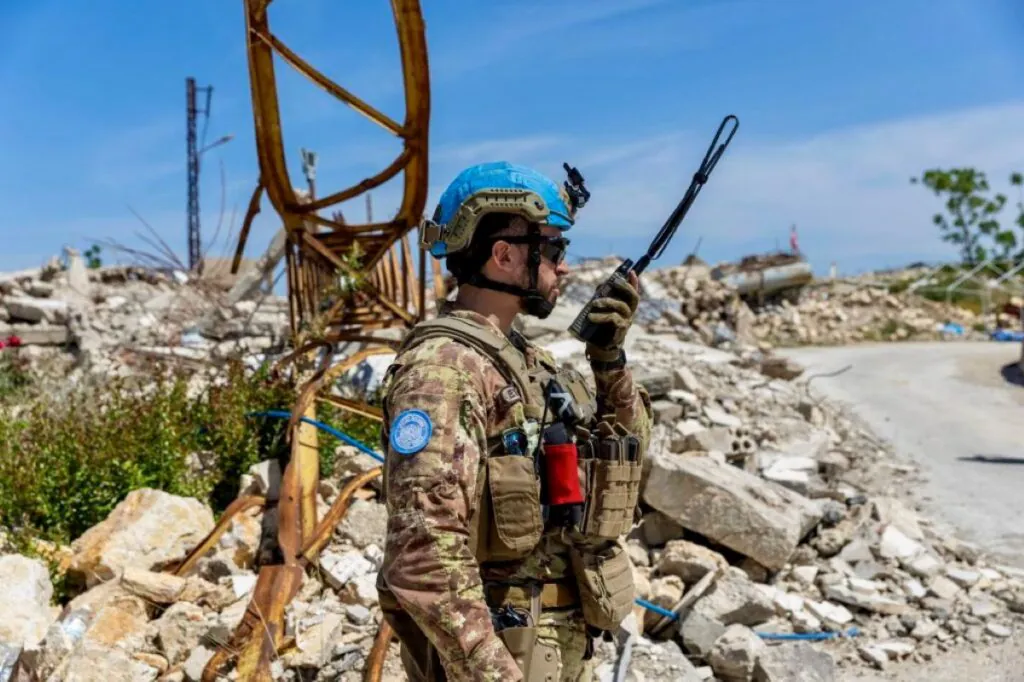
Field tensions and Rome's mediation role
Faced with this negotiating stalemate — aggravated by Israeli raids in the Nabatiye area and the blockade of the agreement concerning “pilot zones” — Aoun's official visit to Rome assumes a tactical significance of primary importance.
During the stops in which Aoun will meet with Prime Minister Giorgia Meloni and subsequently in Taranto for a greeting to the President of the Republic Sergio Mattarella, Beirut's leadership aims to capitalize on the credibility gained by Italian troops in the field. Given the mistrust of Americans and Israelis towards a framework guided by Paris, Italy is seen by Beirut as the most accredited European partner for dialogue with the parties and to assume a balanced position in the future verification commission on the implementation of agreements.
A new cycle of direct negotiations between the contenders, decisive for reopening diplomatic channels ahead of the forthcoming autumn electoral appointment in Israel, is scheduled precisely in the Italian capital within the next two weeks.
Sources and reference review:
- ANSA Agency – Dispatches and diplomatic coverage notes (service by Lorenzo Trombetta)
- L'Orient-Le Jour – Research and analysis on UNIFIL issues, the positions of the Lebanese presidency and negotiations with the United States
- Presidency of the Italian Republic / Italian Government – Notes and official statements relating to institutional meetings between Italian leaders and the Lebanese delegation
- Holy See Press Office (Sala Stampa della Santa Sede) – Official references on diplomatic talks and the Vatican's positions regarding the Middle East




Comments
No comments yet. Be the first!